Crooked Dice
Starting at the Tops
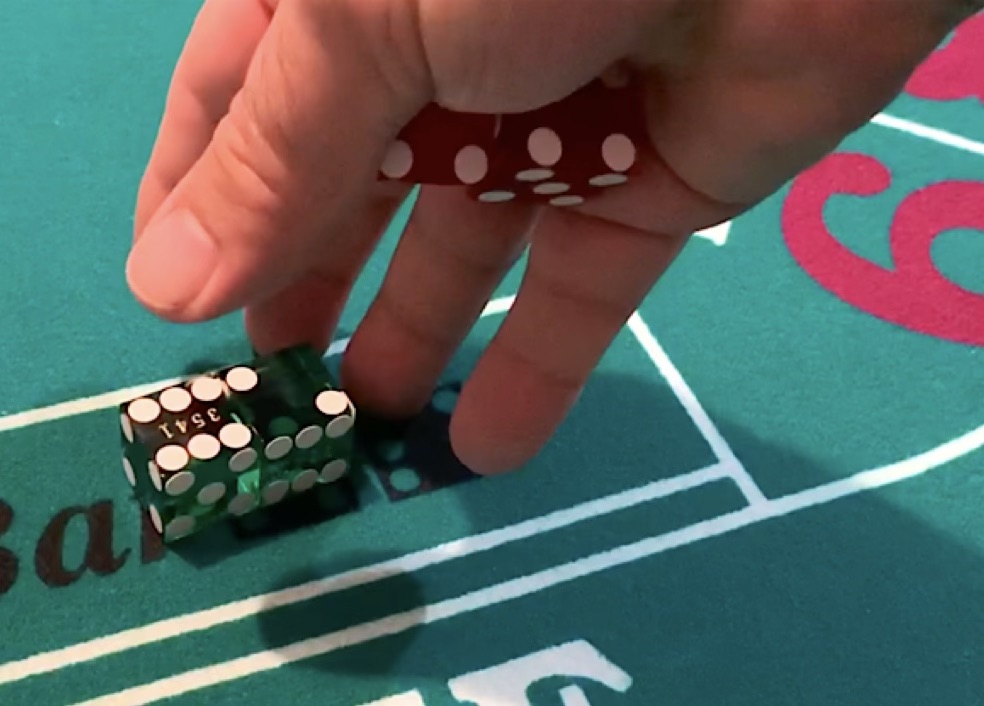
After four decades in the casino business, (yes, longer than many of our readers have been alive), news of a scam still excites us. The alleged NBA-mafia poker scandal, a scheme with a tiny camera and micro ear piece, and the reemergence of The Cutter Scam—all costing victims millions—is thrilling. And they’re reminders that vigilance is never optional.
While there are many scams worth discussing, we’ll save those for future articles. Today, we focus on a recent alleged incident at a Nevada casino. We’ve received so many calls about it that we felt it’s time for another craps article. The last one (on dice sliding) was written over 10 years ago.
Those who’ve been to Sal’s training, where traditional craps games are offered, have certainly heard him quote our dear friend and mentor Steve Forte, “Scams with crooked dice are rare, but not extinct.” Until recently, that seemed mostly theoretical.
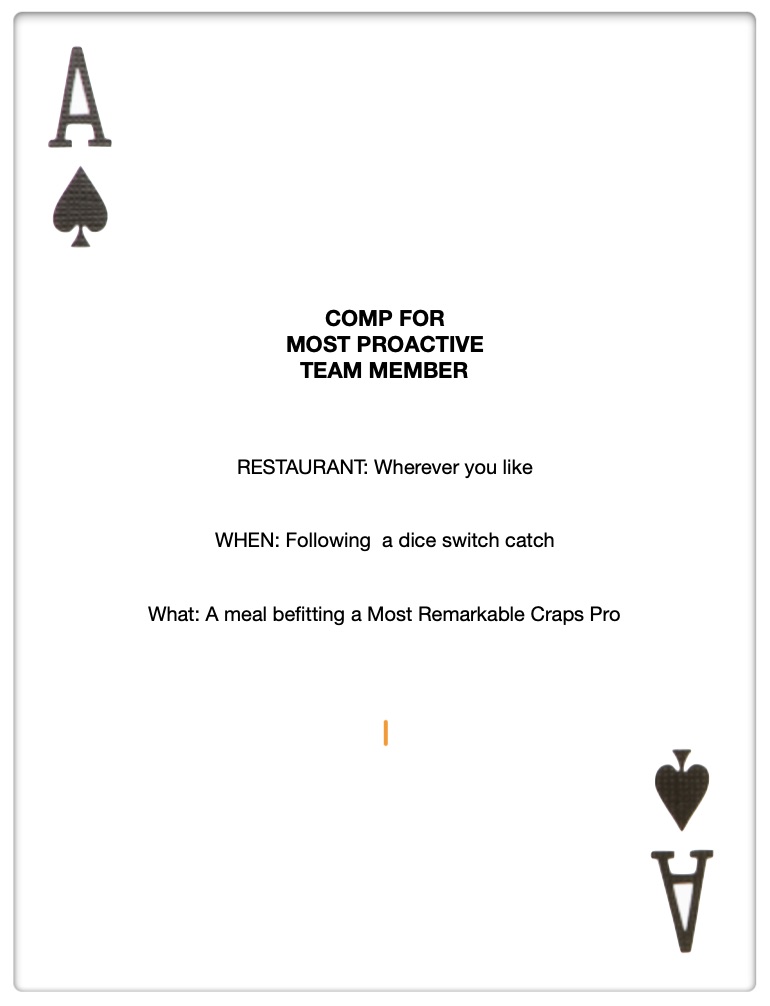
In Dee’s basic craps class, she challenges trainees: “If you catch a dice switch, let us know and we’ll take you to dinner anywhere you want.” Unfortunately, it didn’t happen at one of our 200+ client casinos, or we’d be making dinner reservations for someone right now.
TOPS
There are many different types of crooked dice: loads, juice or mag dice, shapes, bevels, trip dice, and Tops. We’re focusing on Tops, as these are the ones rumored to have been used recently.
⚠️ Tops are 100% guaranteed and CAN'T lose: they CAN'T roll a 7.
Many crooked dice are percentage dice: they will make money in the long run, though they’re not 100% guaranteed. In fact, there are stories where the cheats had to take out loaded (weighted) dice because they were losing money. Tops are different. They are 100% guaranteed—they cannot lose—because they cannot roll a 7.
The most dangerous crooked dice are known as Tops, or T’s, or 100 Percenters. These are misspotted dice that often have the same number on opposite sides, (the top as on the bottom), unlike legitimate casino dice, where opposite sides always total 7 (1-6, 2-5, 3-4). The pips are arranged in a specific manner too, which is no longer widely taught outside our training programs. Other identifiers exist, but they aren’t relevant here.
Tops are misspotted and are limited to certain numbers. The dice allegedly used were 1-3-5 Tops, meaning each die had only the numbers 1, 3, and 5, no 2’s, 4’s, nor 6’s. These dice can only roll 2, 4, 6, 8, and 10. The 10 can only be made the hard way (5+5), which pays 7:1 on a Hard 10 bet in the U.S. And because rolling 7 is impossible, the cheats know exactly what to bet.
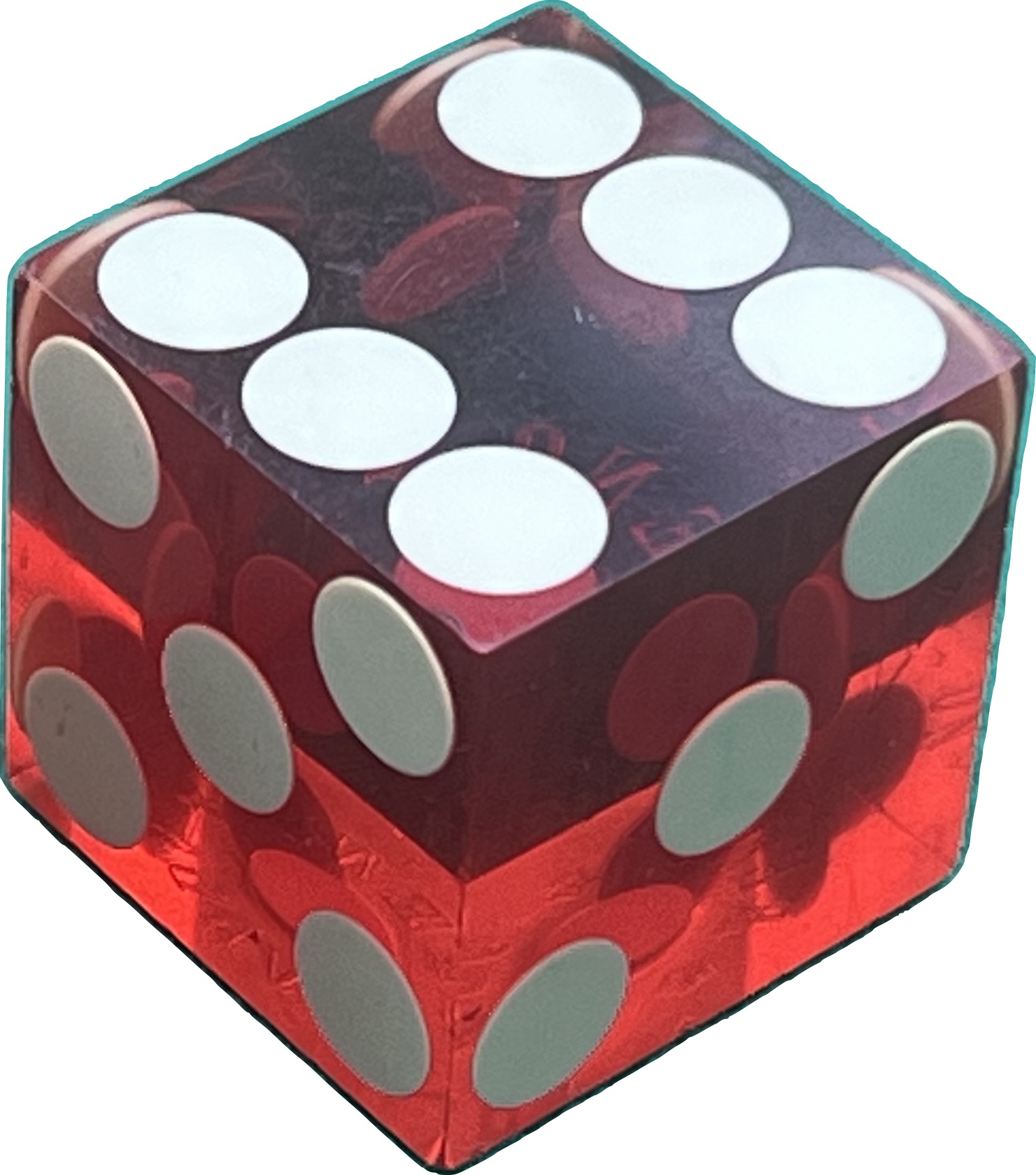
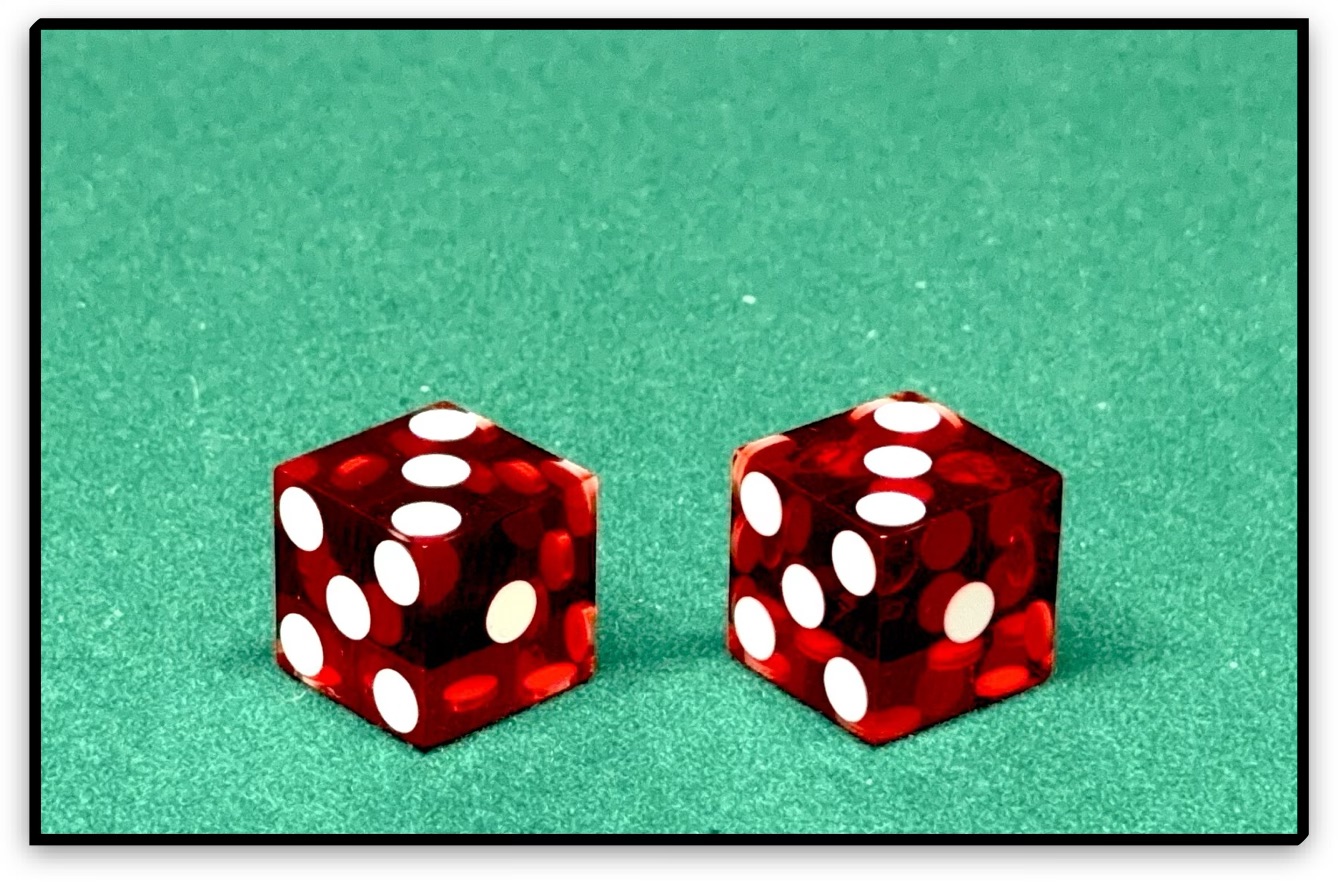
These dice exploit the fact that the human eye can only see two or three sides of a die at any time. For example, in this image the only sides that the eye can see are the 3, 5, and 6. With legitimate dice, we assume the unseen sides are correct, (opposite sides total seven), so we expect the reverse side of the 3 to be a 4, the 5 to be a 2, and the bottom of the die is a 1 (or ace), since 6 is on top.
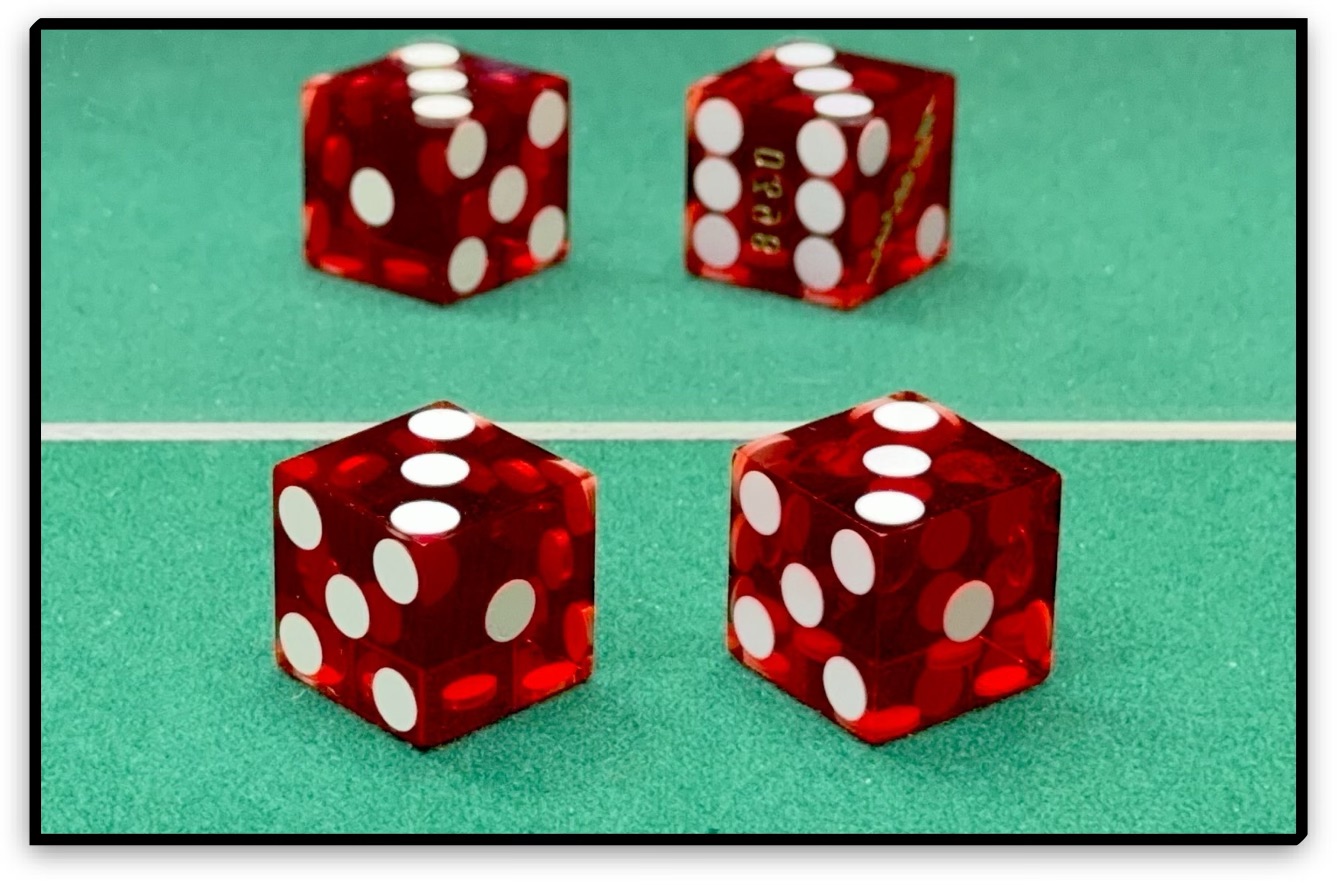
At first glance, the dice pictured below appear identical (left). However, when viewed in the mirror (right), the difference is clear: the die on the left is a 1-3-5 Top with identical numbers on opposite sides, while the die on the right appears legitimate with opposite sides that total 7. This is one of the key reasons mirrors are built into craps tables.
WHAT MAKES TOPS SO DANGEROUS?
The short answer is: These dice can’t lose! They can’t roll a 7 and they win the money fast. Some would say too fast!
At one of Sal’s training sessions, Dee was slouched, half-asleep in the back of the room when a Table Games shift manager, also a veteran of the casino industry, asked, “How does that benefit you?” after Sal explained that Tops can’t roll a 7. Dee shot up straight like a jack-in-the-box in total disbelief. 1-year experience, 25 times.
SECURITY FEATURES
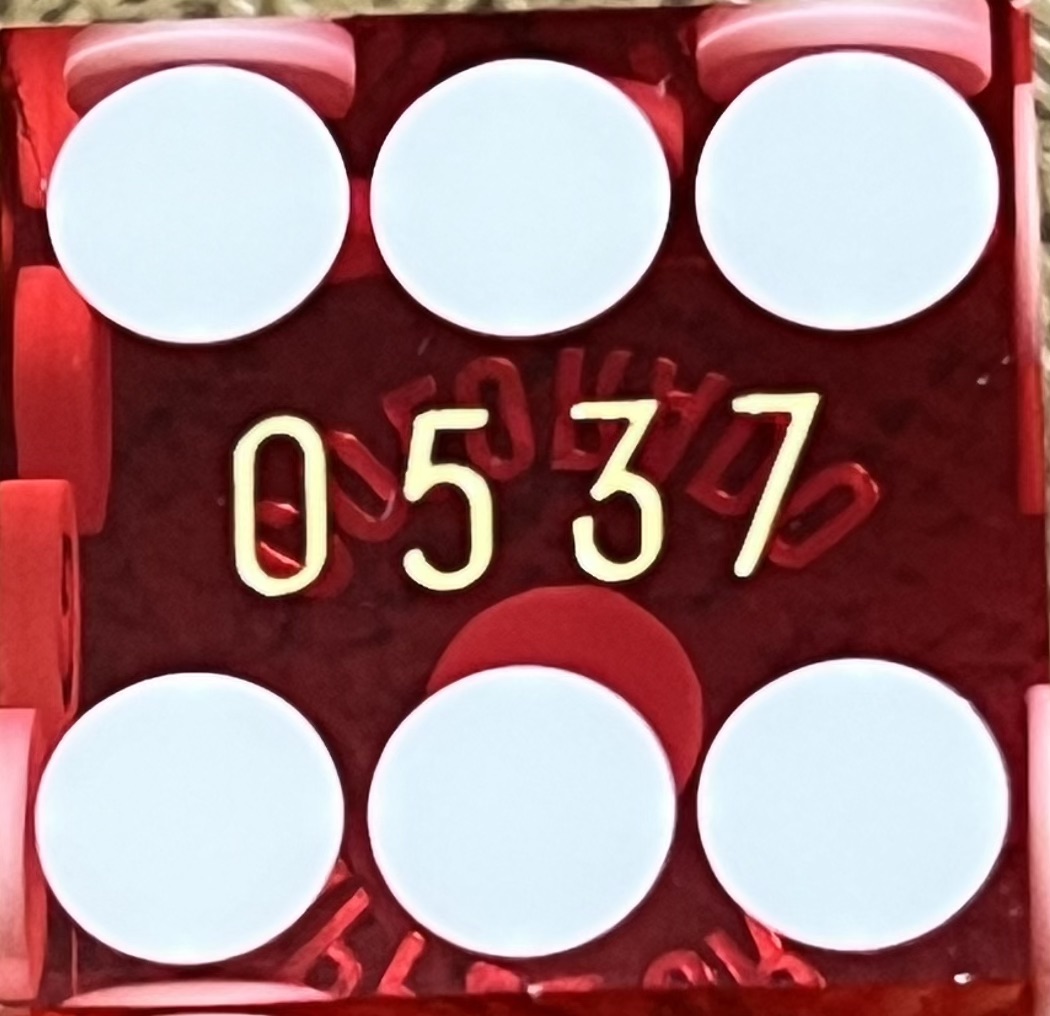
Casino equipment manufacturers offer a variety of optional security features for dice. Having worked with over 200 casino clients worldwide, we can say most of them, (so dare we say, most casinos?), choose: a serial number on the 6 side (A, below); their logo on the 2 side (B); and a protection letter or character behind the center pip of the 3, visible through the 4 side (C). Many also opt for a jurisdictional logo on the ace side (D).

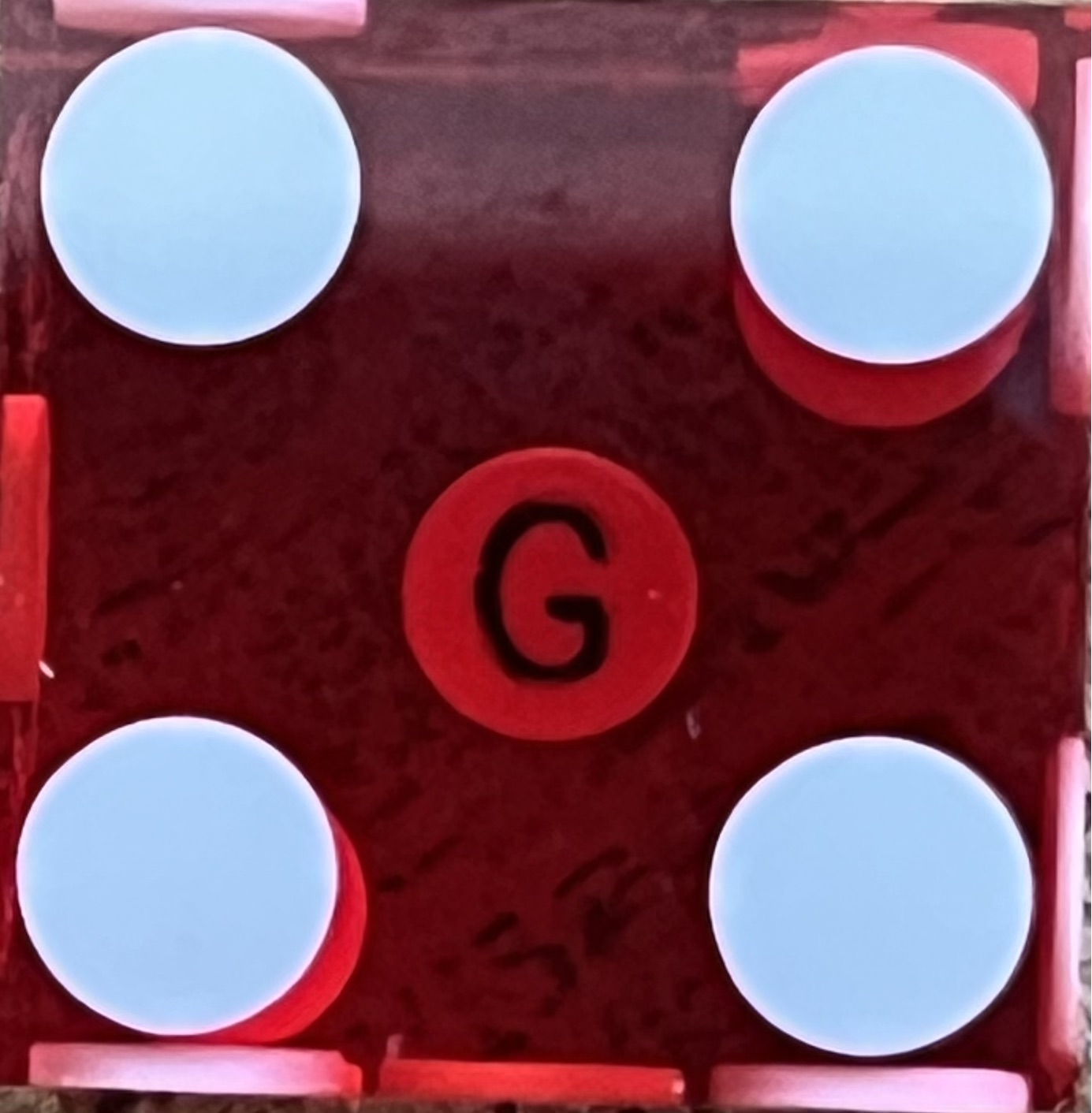
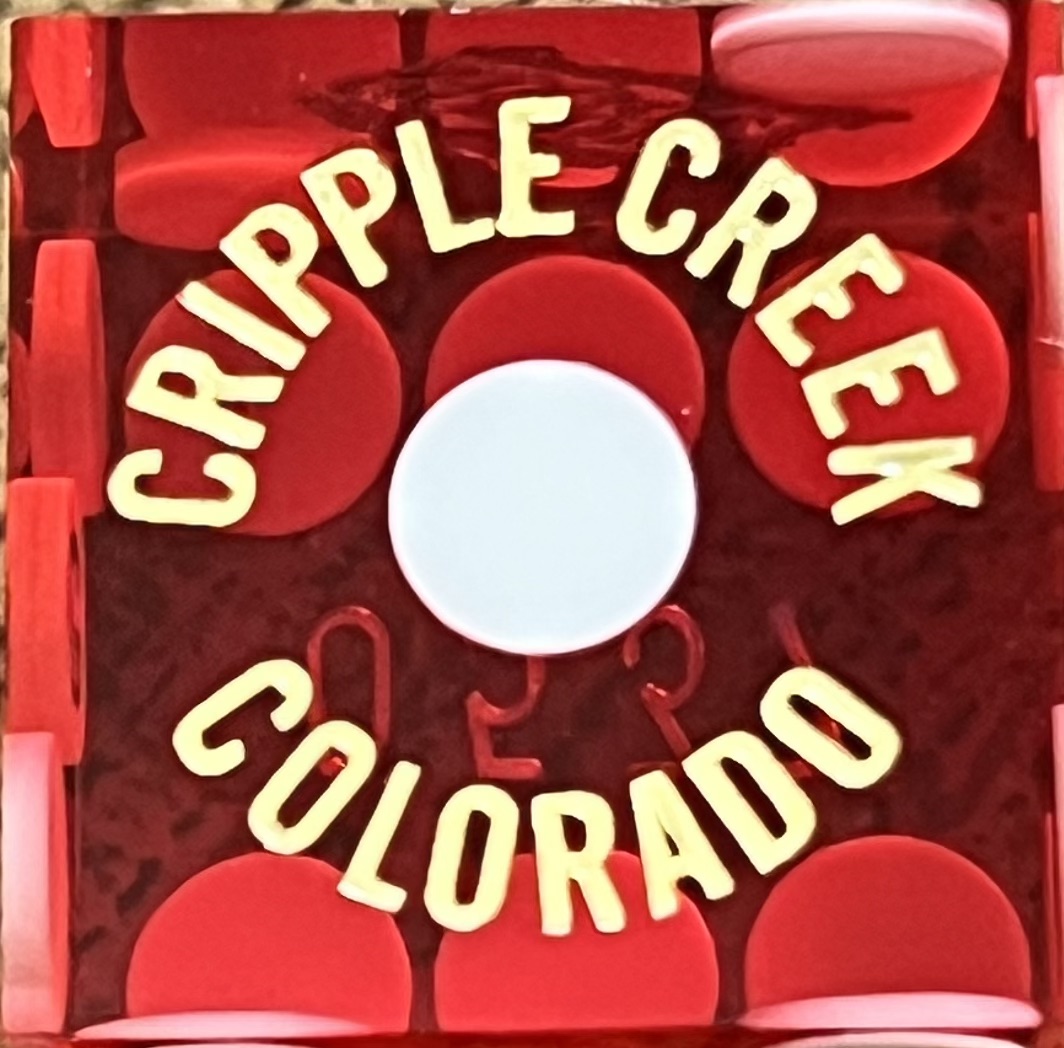
Today, however, many properties forgo the logo around the ace on the 1 side, asking “What’s the big deal?” And not realizing how much more they stand to lose by cutting that corner.
Duplicated security features on crooked dice are typically used by sophisticated crossroaders, who have access to the equipment and resources needed to copy logos, serial numbers, and markings. But without a logo on the 1 side, there’s nothing to copy onto 1-3-5 Tops. No 6 means no serial number. No 2 means no casino logo.
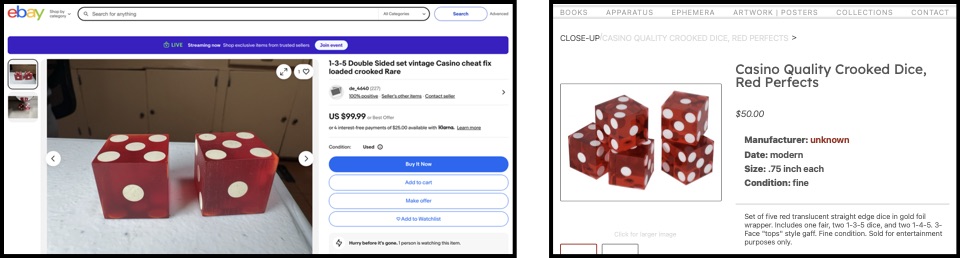
These can be found if you “know a guy,” but are also easily purchased Online. At the top of the next page are two examples. Note the disclaimer on the second ad: “Sold for entertainment purposes only.” Of course!
NOTE: Any security feature can be replicated onto crooked dice, though some are more difficult than others to achieve.
For years, we’ve strongly warned casinos about the unnecessary vulnerability created by leaving the 1 side unmarked. Frankly, we’re surprised something like this didn’t surface sooner, though those of us who’ve spent decades in the business know that we don’t hear about every scam. Many are quietly handled and never discussed publicly.
At a Vegas gambling supply store, Dee jokingly asked the clerk if they sell Tops. He replied sharply, “NO! That’s a federal crime. We can’t have that!” (Really?!) A few weeks later, we returned to the same shop, where Dee noticed a small practice area for shooting dice. There she found a 2-4-6 T. She searched everywhere for its mate—under shelves and through bins of hundreds of dice—but came up empty. When she asked the clerk, “How much for this die?” he replied, “$2.” She rushed to the register, “I’ll take it!!!”
CRAPS: Becoming the most vulnerable game
Any security feature can be duplicated. And the days of a boxperson on every game are largely gone. Even in jurisdictions that still require one, how many casinos actually provide the training needed to protect the game effectively? The real question is: how easy do you want to make it to rip off your craps tables?
Today, many companies offer smart tables and advanced surveillance systems that monitor the float, detect theft and overpayments, calculate correct payouts, bet capping and pinching, past posting, and identify misdeals.
These systems work well for games like blackjack and baccarat. Until recently, they seemed unrealistic for more complex games like roulette and craps. However, we now see Walker Digital offering a smart roulette system that we’ve heard is quite accurate, leaving craps as the last true stronghold for the modern cogger.
Staffing shortages have only made the problem worse. Dice games require more dealers than most Table Games, prompting casinos to turn to hybrid craps. These games use real dice, but require only one dealer. Players wager and are paid through terminals-no cheques involved- while the system handles payouts and collections. Sounds great… until you look at who’s dealing these games: dealers with little to no craps experience, and more importantly, no knowledge of crooked dice, dice switching, nor tells to look for. As an experienced craps dealer if they want to deal one of these games, and most would rather deal blackjack. Seriously.
Whether the game is traditional or hybrid, dice mechanics face the same challenge: how to get the crooked dice into the game. The method is dice switching/swapping. What does that look like? See Sal’s demonstrations at the links below.
🔑 In most dice-switching scams, crooked dice are swapped in for only a few rolls, then switched back out. This makes the scheme nearly impossible to detect after the fact. So, if you wait until the end of a shooter’s roll to check the dice, you’ll be inspecting your own dice.
Countermeasures
There are several effective countermeasures to dice switching, though many are not implemented nor enforced as they should be. Listed below are the most critical elements, grouped by function rather than importance..
1. Knowledge & Training
- Does the boxperson know how to properly use the mirror?
- Do the boxperson and floor supervisor understand the security features on your dice?
- Do they know correct pip arrangement and how to spot misspotted dice?
- Can they recognize suspicious betting patterns?
- Do the boxperson and dealers know what a dice switch looks like in real time?
- Does the stickperson know the dice must have air between them while at the center of the table and does the boxperson enforce this consistently?
2. Vigilence
Vigilance is not seasonal. It’s a full-time job! Dice switching happens quickly and quietly. Miss a moment, and the opportunity is gone. Effective protection requires continuous attention, not reactive reviews after the damage is done.
3. Equipment & Technology
Some casinos have upgraded equipment, including cameras embedded in the rail or back wall of the table, and microphones on the game. These can provide better angles and additional context for surveillance. However, these are not permitted in some jurisdictions and are only effective if:
- Cameras are not obstructed
- Staff understands what to look for
- Surveillance is actively monitoring the game—not just recording it
4. Dice Design: The Ace Matters
For heaven's sake — put a logo around the ace!
When we recommend this, some ask, “What’s the big deal?” Hopefully, this article answers that question. But if game integrity and profitability aren’t your priority then it really isn’t a big deal. And if you believe this can never happen on your game, well, we have a bridge we’d like to sell you.